

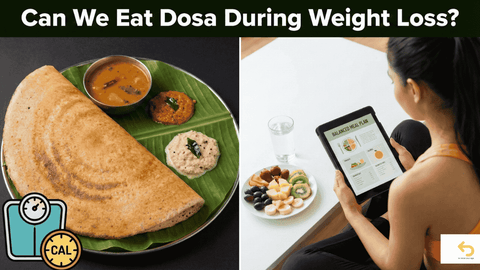
Can We Eat Dosa During Weight Loss?

07 Mar 2026
Hey there! If you are reading this, you probably love a crispy, hot dosa. But now that you are on a weight loss journey, you might be scared. You are asking yourself, "Can we eat dosa during weight loss?" or "Is dosa healthy for weight loss?"
We have good news for you. You do not have to say goodbye to your favorite breakfast!
In this guide, we will tell you exactly how to eat dosa without ruining your diet. We will look at the calories, the ingredients, and the simple tricks to make your dosa a fat-burning meal.
Let’s dive in!
Is Dosa Good for Weight Loss? (The Short Answer)
Yes, absolutely! You can eat dosa during weight loss, but there is a catch.
Traditional dosa is made from rice and black gram (urad dal). It is delicious and healthy, but it is also rich in carbohydrates. If you eat 5-6 dosas with lots of oil and coconut chutney, you will gain weight.
However, if you make smart changes—like using less oil, adding more lentils, and pairing it with healthy sides—dosa can actually help you lose weight. It is light, easy to digest, and gives you good energy.
Key Takeaway: It’s not about quitting dosa; it’s about how you cook and eat it!
Understanding Dosa: Calories & Nutrition
Before you take that first bite, let's look at what is inside a standard homemade dosa.
1 Plain Homemade Dosa (approx.):
-
Calories: ~120-135 kcal
-
Carbohydrates: 20g
-
Protein: 3-4g
-
Fat: 3g (varies by oil usage)
Compare this to a standard Masala Dosa from a restaurant:
-
Calories: ~350-400+ kcal (because of the potato masala and butter!)
See the difference? The plain dosa is fine. The butter and potato filling are the "danger zones."
Why Fermentation Matters
Dosa batter is fermented. This is a magical process! Fermentation breaks down the carbs, making them easier for your body to digest. It also increases Vitamin B and creates healthy bacteria for your gut.
Gut Health Tip: A healthy gut helps you lose weight faster. If you often feel bloated or have digestion issues, your weight loss might stop. To support your gut health while dieting, you can add a good Pre-Probiotic Supplement to your routine. It helps your stomach handle food better!
The "Danger Zones": When Dosa Makes You Fat
If dosa is healthy, why do people say it makes you gain weight? Here are the 3 biggest mistakes:
1. The "White Rice" Problem
Traditional dosa has a lot of white rice. White rice can spike your blood sugar levels quickly, which might make you feel hungry again soon.
-
The Fix: If you are worried about sugar spikes after eating carbs, natural spices like cinnamon can help balance it out. Consider checking our Cinnamon with Chromium Capsules, which are great for managing blood sugar levels after meals.
2. The Chutney Mistake
Coconut chutney is tasty but very high in calories because of the coconut oil and fat.
-
The Fix: Swap coconut chutney for Tomato-Onion Chutney or Coriander-Mint Chutney. They have fewer calories and taste amazing!
3. The Oil Overload
Restaurants use huge spoonfuls of oil or butter to make the dosa crispy.
-
The Fix: Use a non-stick pan at home and use just 1/2 teaspoon of oil or ghee.
5 Healthy Dosa Variations for Fat Loss
Do not stick to just white rice dosa. Try these "Super Dosas" to speed up your weight loss!
1. Moong Dal Dosa (Pesarattu)
This is a champion for weight loss! It is made from green gram (moong dal) instead of rice. It is packed with protein and fiber, keeping you full for longer.
2. Oats Dosa
Instant and healthy. Powder some rolled oats, mix with curd and spices, and make a dosa. Oats are full of fiber, which helps cut belly fat.
3. Ragi Dosa (Finger Millet)
Ragi is a superfood. It has lots of calcium and low carbs. It has a low glycemic index, meaning it won’t spike your sugar levels.
4. Quinoa Dosa
Swap rice for Quinoa. It is a complete protein source and perfect for a strict diet.
5. Mixed Dal Dosa (Adai)
Use a mix of Toor dal, Chana dal, Urad dal, and Moong dal. High protein = high muscle repair and fat burning!
Pro Tip for Metabolism: To boost your fat burning while eating healthy meals, many of our clients use the Weight Management Pack. It combines Green Tea extract and metabolic boosters to help you reach your goals faster.
Smart Tips to Eat Dosa and Still Lose Weight
Follow these golden rules to enjoy your meal guilt-free:
-
Portion Control: Stick to 2 medium dosas. Do not eat 4 or 5 just because they are tasty!
-
Eat Sambar (With Veggies): Sambar is full of lentils and vegetables. It is the best side dish for weight loss. Eat more sambar and less chutney.
-
Protein First: Eat your sambar or a side of egg whites before you bite into the dosa. This reduces the sugar spike.
-
Hydrate: Drink water 30 minutes before your meal.
-
Supplement Support: If you feel weak or tired during your diet, your body might be missing essential nutrients. A Sports Multivitamin ensures you have the energy to stay active and burn calories.
Best Time to Eat Dosa for Maximum Results
Timing is everything!
-
Breakfast (Best Time): Your metabolism is fast in the morning. Your body burns the carbs from the dosa easily throughout the day.
-
Lunch (Good Time): A decent option, but keep the portion small.
-
Dinner (Avoid): Try to avoid rice-based dosa at night. Carbs at night can be stored as fat if you are not active. If you must eat dosa at night, choose Moong Dal Dosa (no rice).
Are you struggling with night cravings or sleep? Sometimes poor sleep leads to weight gain. Our Magnesium Complex can help relax your muscles and improve sleep quality, which is crucial for weight loss.
Frequently Asked Questions (FAQs)
Q: Can I eat Masala Dosa on a diet?
A: It is better to avoid it because of the potato filling and butter. If you crave it, make a homemade version with a cauliflower or paneer filling instead of potato.
Q: How many dosas can I eat for weight loss?
A: Two medium-sized homemade dosas are a safe limit for a meal.
Q: Is Rava Dosa good for weight loss?
A: Rava (semolina) is essentially wheat. It is okay occasionally, but Ragi or Moong Dal dosas are much better choices for burning fat.
Q: Does ghee make me fat?
A: Small amounts of pure ghee are actually good for you! Just don't drown the dosa in it. 1/2 teaspoon is fine.



